 Junagal
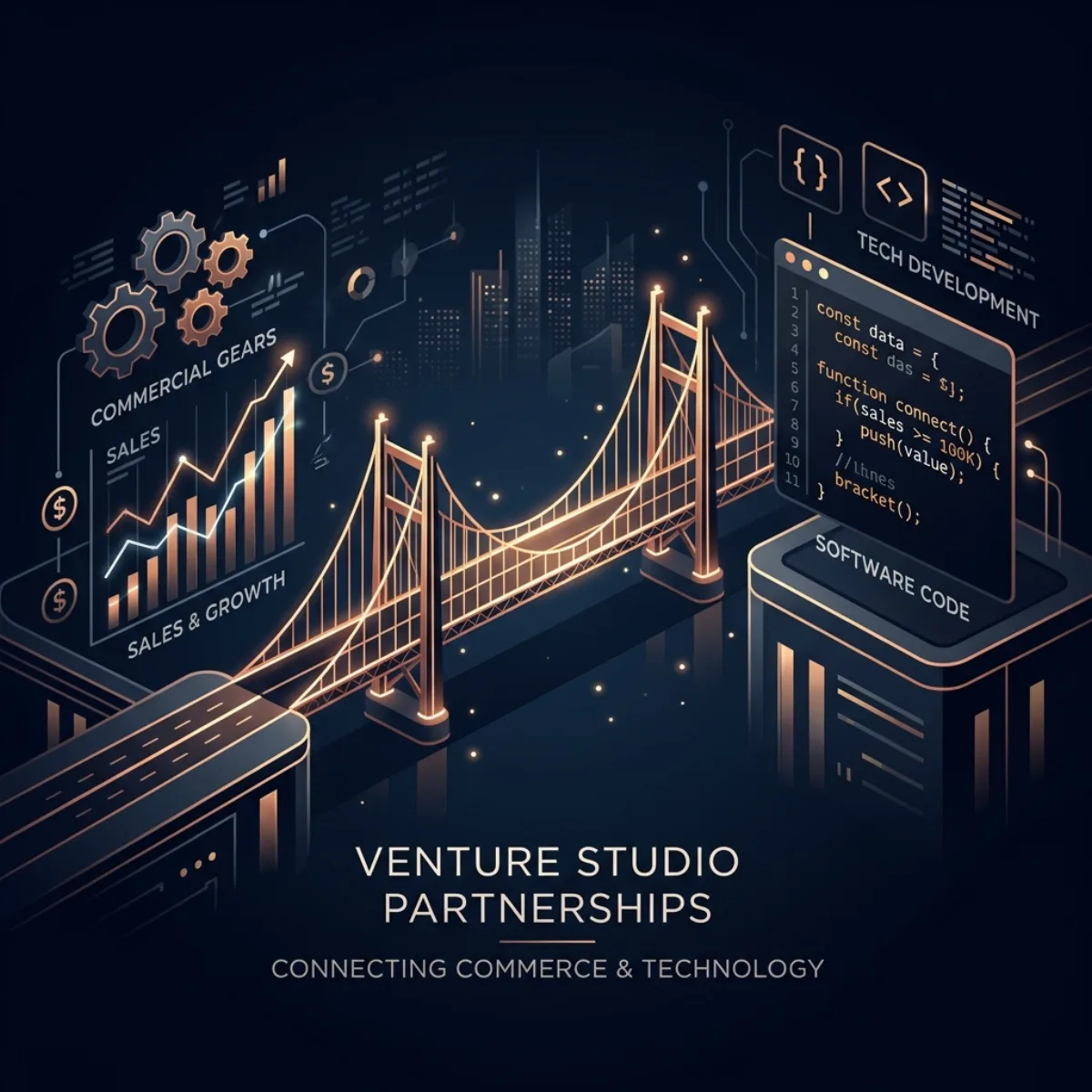
You do not need a computer science degree or software engineering background to qualify for the UK Innovator Founder Visa. However, you must prove that you can execute the business plan and build a viable product. Here is how non-technical founders can succeed.
1. The Skills Gap Solution: Building Your Execution Engine
One of the most frequent rejection points for commercial or business-focused founders is the viability of execution. Endorsement boards will review your CV. If they see a history of sales, operations, or marketing, but your business plan proposes a complex, machine-learning-driven SaaS platform, they will question whether you can actually build it. If you have no development team and no code, they will conclude that you do not satisfy the viability criterion.
To bridge this technical execution gap, commercial founders have three primary structural strategies:
- Partnering with a Technical Co-Founder: Recruiting a Chief Technology Officer (CTO) or technical lead who holds equity in the business. The endorsing body will evaluate the collective credentials of the founding team. When presenting your team, ensure you outline a clear division of labor, a structured equity split (typically 50/50 or 60/40), and IP assignment agreements showing that all code belongs to the UK company.
- Leveraging an Active Venture Studio: Working with an established co-building partner (like Junagal) that handles technical architecture, system design, and MVP development. This reduces early execution risk in the eyes of the endorsing body, as they know a professional team of developers is building the product.
- Detailing a Technical Hiring Roadmap: If you are applying as a solo founder, you must show a detailed, funded hiring plan starting immediately upon arrival in the UK. This requires mapping out specific job descriptions, salaries, and timelines for recruiting your first UK-based developers.
2. Proving Commercial Viability: Customer Validation Framework
While developers can show repos and code, commercial founders must win on market validation. Your business plan must show that you have spent time talking to real customers, verifying their pain points, and getting early commercial commitments.
A great way to prove commercial viability is through a structured user validation campaign. You should compile:
- Customer Interview Logs: A list of structured interviews conducted with UK target businesses. Detail who you spoke to, what questions you asked, and their specific responses.
- Market Interest Surveys: Quantitative data showing that target clients face the problem you are solving and are willing to pay for your proposed solution.
- Letters of Intent (LOIs): Non-binding commercial agreements from prospective UK clients. An LOI should state that if you build the platform with the described features, they intend to purchase or pilot it.
Letter of Intent Template Outline:
"We, [UK Company Name], confirm that we have reviewed the product roadmap for [Your Startup]. We experience [Problem] daily, costing us £[X] annually. If [Your Startup] delivers the proposed solution, we intend to participate in a 90-day paid pilot phase at a rate of £[Y] per month."
3. Building the Visual Prototype: Figma & Interactive Mockups
Do not submit a business plan consisting entirely of text. Endorsing bodies receive dozens of applications weekly, and they value visual proofs of concept. For non-technical founders, building a high-fidelity interactive prototype in Figma or a no-code tool is the most cost-effective way to pass panel scrutiny.
Your prototype must not be a static set of slides. It must show:
- Core User Flows: Visual step-by-step screens showing how a customer registers, completes the main transaction (e.g., ordering inventory, analyzing data), and views insights.
- Interactive Demos: A clickable user flow link that the endorsement assessors can interact with during their review of your dossier.
- UI/UX Best Practices: Clean, modern typography, intuitive layouts, and a design that matches the target UK industry's standards.
4. Architecting the Technology Roadmap
Even if you are not writing the code yourself, your business plan must detail your technical architecture. The endorsing panel will include software architects who will look for:
- The System Architecture: AComponent diagram showing how the client interface, API gateway, back-end servers, and databases communicate.
- Data Storage and Flow: Where your data is stored (e.g. AWS RDS, Google Cloud Spanner) and how it is processed.
- Data Protection & GDPR: A section outlining how your startup will protect user data, including encryption protocols, access controls, and compliance with UK GDPR rules.
5. Panel Interview Preparation: 10 Common Technical Questions
During the video panel interview, assessors will test if you are the active driver of the business or simply a passive investor hiring an agency. You must be prepared to answer technical questions. Here are the top 10 questions and how to answer them:
- "Who wrote this technical roadmap?" Answer that you designed the roadmap in collaboration with your technical partner/venture studio, defining all product requirements and user flows.
- "Why did you select this specific tech stack?" Explain the choice based on development speed, developer availability, and performance (e.g. React for responsive UI, Node.js for scalable API requests, and PostgreSQL for robust data relationships).
- "How will you scale the product database as user numbers grow?" Explain your plan for database scaling (e.g., read replicas, caching layer using Redis, and microservice segregation).
- "How does your product ensure GDPR compliance?" Detail data encryption at rest and in transit, user data deletion controls (Right to be Forgotten), and storing UK user data locally.
- "What is the proprietary technology or IP in your solution?" Explain the custom algorithms, data processing pipelines, or system integrations that form your technical moat.
- "How will you manage development quality?" Explain code reviews, automated CI/CD testing, and staging environments before releasing updates.
- "How did you model your API integration costs?" Detail the pricing tiers of your main third-party services and how they scale with transaction volumes.
- "What security protocols protect your API endpoints?" Mention OAuth 2.0 authorization, rate limiting, SSL encryption, and API keys.
- "How will you handle product downtime?" Outline backup server failovers, automated monitoring tools (like Datadog or Sentry), and alert procedures.
- "Why are you hiring local UK developers instead of outsourcing?" Explain that maintaining close technical alignment and product quality requires having core technical team members based in your London office.
Building Something That Needs to Last?
Junagal partners with operator-founders to design, build, and scale defensible tech startups in the UK under the Innovator Founder Visa framework with permanent capital.
Apply for 1-Click Strategy Session →Related Decision Frameworks
Move from insight to execution with these models.